I have finally done something that I have been recommending to my students for years. I have read a whole book in the language I am trying to learn - Polish. Twice. I wanted to be sure it was good and read. Now, I must admit that I read in Polish every day. I read Onet, Na Temat, the local newspaper and some of my favorite blogs. I had never read an entire book. Until now.
What does reading in Polish give me? I feel more connected to Poland when I read in Polish. I get to know what is going on in Poland and how Polish people view what is going on in the world. What else does reading in Polish give me? Something my doctor students already know – access to things that are difficult to access in my language. Want an example? See how many good herring recipes you get if you google “herring recipes”. Now try śledź przepisy. It’s a whole new world. Not life or death, but sometimes you’d just like to make a really good herring salad.
Sometimes I feel like someone has opened a door to a secret room that I have access to because I can read in Polish. It’s funny because that’s how I try to get the teens hooked on English. I explain to them that a whole new world will become accessible to them if they learn English because, let’s face it, more of the world is in English than in Polish. And how can you call yourself the middle school rap/hip-hop guru if you’ve never even heard “Rapper’s Delight”? Teens of Poland, rap didn’t start with Eminem. Google it! But I digress. Back to reading in Polish.
Reading in a foreign language is a great way to learn new words and see grammar structures in use. I want to learn new words, that’s for sure, and I suppose somewhere deep inside I want to improve my grammar. That’s not why I started reading books in Polish though. The real reason is….drum roll…I really wanted to read some books and they are not available in English. I had ants in my pants and I couldn’t stand it that everybody else had read the books and I couldn’t.That’s the truth.
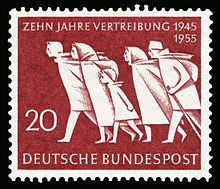
So on the recommendation of a friend I bought the book “Wypędzone”, the stories of 3 German women who were expelled from Poland after WWII. I know that for many people this a controversial topic. In my opinion, the Poles’ expulsion from lost lands doesn’t negate the Germans’ expulsion. The fact that the Germans were the aggressors doesn’t mean they must sacrifice all claims of suffering. The stories of the these 3 women told in their own words remind us that the Germans were people too. (Now I am reading “Sołdat” where maybe I will find that Russian soldiers were people too, but from the description in “Wypędzone” it’s not looking good).

What struck me the most was not the brutality of the Russian soldiers. I’ve heard a lot of stories of such. What struck me the most was the lack of information. I mean, intellectually I was aware of that, but reading the accounts it just shows how little the people knew about what was going on and what they should do or where they should go. Jeez, there was a fire in the next village last weekend. I knew because I could see the fire and I heard the sirens. If I really had wanted to know what was going on, I could have got in the car and driven the 2 km to see for myself or shouted to the neighbor across street. She would have texted her mother to ask her father who is the local volunteer fire chief i po sprawy. Not back then.
The first story is of Helene Pluschke of Striegau, now Strzegom. How she managed to stay in Strzegom so long after the war was almost a miracle, but not without cost. Brutal beatings and rapes from soldiers of the Red Army and later from the new Polish authority along with starvation and fear for herself, 5 children and missing husband - these were the costs of the war for this woman. Helene describes the plight of German women, “My, kobiety, mamy odpokutować za to, co Niemcy wyrządzili innym.” Despite her many humiliations on Śląsk territory, Helen still considered Śląsk her home and remained hopeful that she and her family would some day return to their rightful home, “Ciągle jeszcze wierzę, że my, Niemcy,będziemy mogli zostać na naszej ojczystej ziemi, że Polacy I Rosjanie wkrótce się wycofają. A Śląsk pozostanie niemiecki! Od tylu pokoleń Śląsk jest moją ojczyzną, ojczyzną mojej rodziny. Nie chcę i nie mogę się poddać.”
(We women have to atone for what the Germans have done to others.)
(I still believe that we, Germans, will be able to stay in our homeland, that the Poles and Russians will retreat. Śląsk shall remain German! For many generations Śląsk has been my homeland, the homeland of my family. I don't want to and I cannot give up.)
The next story is of Esther von Schwerin. Esther was from an aristocratic family and she married into money as well. Esther seemed to understand that her family wasn’t going to make it through the war in one piece. While traveling, she and her husband even traveled separately to reduce the chances of leaving their children orphans. Unfortunately, Esther’s husband did not survive the war and they lost their entire fortune. Not once did Esther bemoan the loss of the family fortune or position. She managed to escape to the west, not without danger but they made it somehow and Esther began to rebuild the network of her family. Unlike Helene who bemoaned the losing of Śląsk to the Poles, Esther took a different view.Quoting her pastor she said, “Pojęcie ojczyzny nie kończy się na ziemi pod nogami.” Later she adds, “Ojczyzna niekiedy prowadzi do całkiem nowego zycia, które dzięki niej możemy zaakceptować. Ojczyzna to człowiek, który pozostaje nam wierny, dzieci, którym nic się nie stało. Ojczyzna to też zaorane pole, pachnące tutaj tak samo jak w domu.” She later quotes Herman Hesse saying, “Ojczyzna jest w tobie – lub nigdzie indziej.”
(The concept of homeland does not end with the ground beneath our feet.)
(Homeland every so often leads us to a whole new life which thanks to that life we can accept. Homeland is the person who stays loyal, the children who remain unharmed. Homeland is the plowed fields which smell the same here as they did at home.)
(Homeland is in you - if no where else.)
The third and final story is of Ursula Pless-Damm. Hers is the only story written at the time of the war. Ursula was married, but without children at the time of the war. Ursula was no less resilient than the women above. She seemed resigned to her fate at the same time determined to survive. She says, “Zdumiewające, ale od wczoraj nie czuję już strachu. Za sprawą tych okropnych wydarzeń uświadomiłam sobie, że nikt nie uniknie pisanego mu losu. Trzeba go przyjąć, kiedy nadejdzie.” Later she adds as soldiers take quarters in her home, “Mam wrażenie, że staliśmy się aktorami i czekamy już tylko na przydzielenie ról i na wskazówki reżysera.”
(Strangely enough I feel no fear since yesterday. Because of the horrible things that have happened, I realize that no one can escape the fate that is written for them. You have to accept it when it comes.)
(I get the feeling that we've all become actors and are we are just waiting for our roles and direction from the directors.)
Ursula contemplated the sense of the war and the reasons behind the victor’s brutality, “Przywołuje w myślach nasze zwycięstwa pierwszych lat wojny. Jak upokorzeni musieli czuć się ludzie przez nas pokonani? Dlaczego muszą istnieć zwycięzcy i pokonani?” In her thoughts about Poles, she wondered, “Dlaczego nie traktowaliśmy ich lepiej? Dlaczego musieli chodzić oznakowani literą P?” Ursula managed to escape to Berlin with no particular sentiment for the the land she had left behind or the land she was traveling to.
(I recall the first years of the war. What humiliation the people we defeated must have felt? Why do there have to be the victors and the defeated?)
(Why didn't we treat them better? Why did they have to wear the letter P?)
One of the most moving passages comes from a short passage about another woman. Thinking that she and her children were trapped by the Russians and about to be burned alive, she takes the dramatic decision to poison herself and her children only to discover that the poison was too weak and they had to make their escape anyhow. About poisoning her children she says, “Niech sobie inni oceniają to, jak chcą, niech nazywają matki morderczyniami – ja mogę tylko przysiąc, że dla matki to święta chwila.” That passage while sending chills down my spine, also hits home.
(Let other people judge us how they want, call us murdering mothers - I can only attest that for a mother it is a sacred moment.)
And now I cannot find the passage I’ve been looking for and I can’t remember which woman said it, but it was a commentary on why farmers had such a difficult time leaving their land – because it’s something alive not just ground. How many farmers carried a bag of soil with them as they were evacuated?
I’d be lying if I said these stories didn’t move me as I sit here in my post-German house a few kilometers from the former Poland-German border. I’m sure the German family would recognize their home even today if they could see it. They’d be surprised to see the Linden tree that they planted when they built the house now towers tall over the building. Maybe they’d enjoy knowing that we have some of the original light fixtures, a perfectly functioning tea service and someone’s silver anniversary commemorative plate. I wonder about them sometimes and also about the Polish people who too were uprooted from their home and resettled here. Did everyone have such dramatic and traumatic experiences? I should hardly think it possibly but am deeply convinced it couldn’t have happened any other way.